Our Practices
In the few short years we’ve been growing on this land, we’ve treated it as a place of learning as much as production. We’ve tried, observed, adjusted, and tried again—testing different approaches to understand what best supports the soil, the crops, and the wider ecosystem. From this process, we’ve arrived at a hybrid system that aims to protect soil life, while remaining productive, practical, and efficient.
Looking ahead to 2026, we’ll be expanding onto additional land with George Quirke in Goolin. This next step reflects that same willingness to adapt and evolve. While Bird and Blossom Farm will continue as an intensive market garden, George’s land will be grown at a slower pace, with more space, fewer interventions, and less pressure on the soil. Together, these two systems allow us to keep learning—balancing productivity with long-term care for the land as we grow into the future.
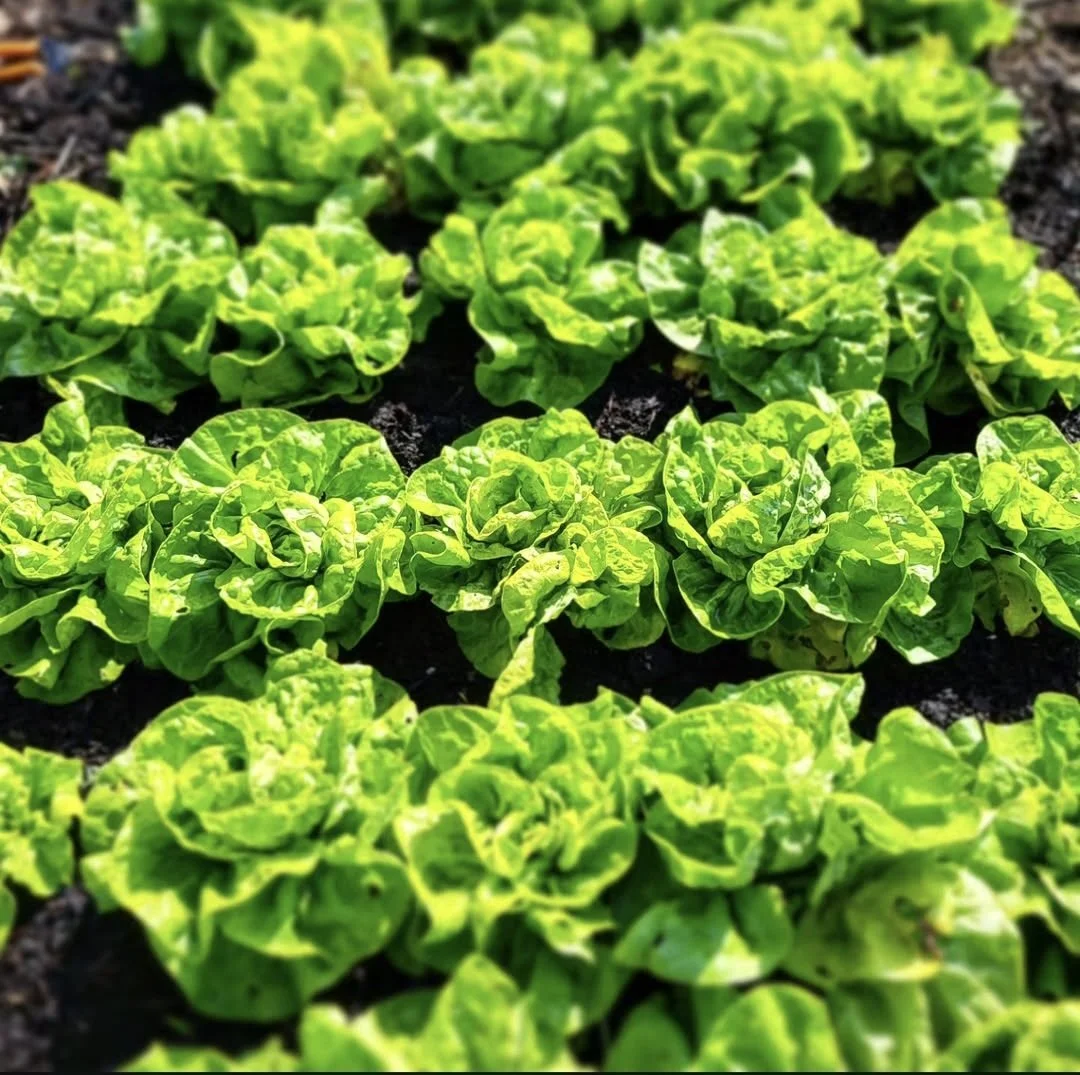
The Market Garden
In the market garden, we draw inspiration from the methods of Jean-Martin Fortier, adapting his approach to suit Irish conditions and our own landscape. We work with permanent beds, raised each year using a rotary plough on a BCS walk-behind tractor, and use bio-intensive spacing to grow a wide range of crops efficiently while minimising land use.
Although this style of growing is productive and intensive, our priority is always the long-term health of the soil. Apart from the BCS for light tillage and a lawn mower, the garden is worked almost entirely by hand, reducing compaction and allowing us to respond carefully to what the land needs.
We focus on building soil fertility rather than extracting from it. Compost is applied thoughtfully, cover crops are used where possible to protect and feed the soil, and crop choices are guided by observation and balance. By taking a holistic approach, we aim to create a resilient growing system that supports healthy plants, encourages soil life, and improves year after year.
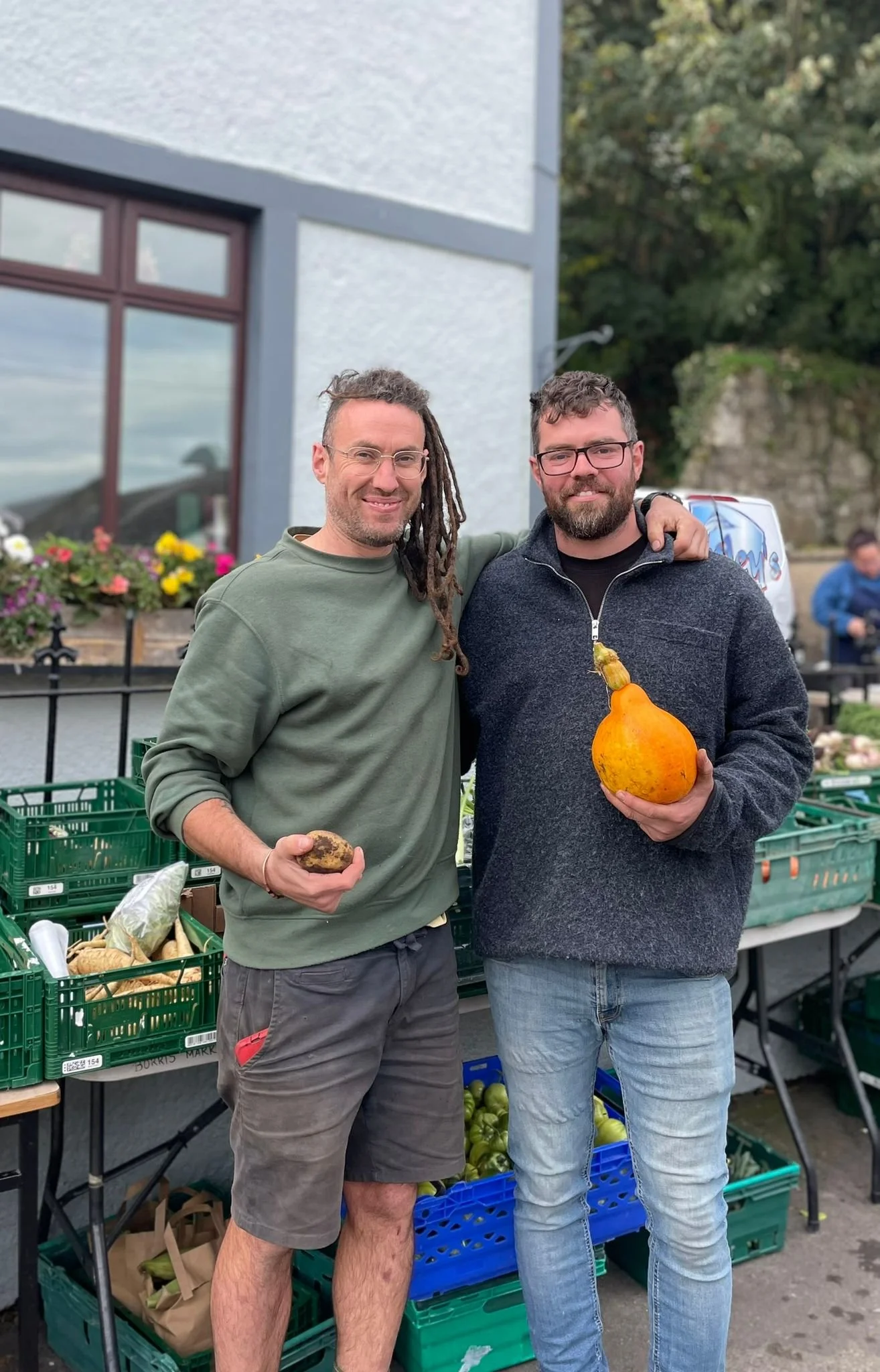
Field-Scale in Goolin
With George, our approach is quite different. Here, we aim to grow a generous quantity of high-quality produce across a larger area. This system makes use of a tractor and is therefore less intensive than the market garden, but working at this scale brings its own challenges—particularly the risk of soil compaction from heavier machinery.
This year, we are adapting the methods of Bryan O’Hara. We will carry out a one-off tillage event to open the ground before transitioning the area into a permanent bed system, ensuring that tractor wheels do not travel over the growing beds again. From there, the goal is to steadily move towards a fully no-till system.
Through careful cover cropping, on-site biochar production, and the use of a wormery, we aim to improve soil structure, increase biological activity, and support a genuinely regenerative effect on the land. This slower, long-term approach reflects our commitment to building healthy soils that can sustain productive growing for years to come.